
- Best High-Protein Dog Food - October 28, 2026
- Raw Diet and Pet Dental Health - October 22, 2026
- Fresh vs. Kibble Dog Food - October 22, 2026
Shopping for high-protein dog food may seem simple, but it’s actually a bit more complicated than it sounds. It can mean very different things depending on the type of food you’re looking at, like kibble or raw. A bag of kibble might list 30% or more crude protein on the label. A fresh or raw food might list a number far lower than that, sometimes under 15%. It’s easy to look at those two numbers and assume the kibble is the higher-protein option, but that isn’t necessarily the case.
Fresh and raw foods contain a lot of water, and water drags the label percentage down even when the food is built mostly around meat (protein). That’s the first thing to understand before comparing anything, and we’ll go through how to do the math below. The “best” high-protein food isn’t just the one with the biggest number on the bag. The source of the protein, whether the food is complete and balanced, how many calories it has, how it’s processed, what it costs, how you store it, how convenient it is to feed, and what your particular dog actually needs all factor into the decision.
What Does “High-Protein Dog Food” Actually Mean?
There’s no official definition of “high-protein” dog food. No regulatory body sets a threshold, and the term gets used loosely across every type of food. One brand’s high-protein kibble might sit at 28% and another’s at 38%, while a fresh food company might use the same phrase for a recipe with a label number in the teens. None of them are wrong, which is why the phrase alone doesn’t tell you much.
The tricky part is that the protein percentage on a label includes the water in the food. Kibble is dry, around 10% water, while fresh and raw foods are mostly water, often 65% to 75%. Considering water is part of the total weight but adds no nutrition, it drags the protein number down. If 100 grams of raw food is 70 grams water and 12 grams protein, the label says 12%. But out of the 30 grams that’s actually food, that’s 40% protein.
You might be thinking that doesn’t matter. If a cup of kibble has 25% protein and a cup of raw food has 12%, the kibble has more protein in it, water or not. And that’s true, cup for cup.
But a dog will usually eat a different amount of a high-moisture food than a dry kibble because the foods have different calorie densities. That is why the as-fed percentage alone does not tell you how much protein a dog will actually consume. Dry-matter protein gives you a fairer way to compare the protein concentration of the foods, while calories and feeding amounts help show how much protein the dog receives over the course of the day.
As-Fed vs. Dry-Matter Protein: How to Compare Dog Foods Fairly
You don’t need anything more than the two numbers already on the label. Here’s the formula and a side-by-side example:
| Dry-matter protein % = as-fed protein % ÷ (100 ? moisture %) × 100 | |||
| Step | What to Do | Kibble | Raw Food |
| 1 | Find the crude protein % on the label. | 30% | 15% |
| 2 | Find the moisture % on the label. | 10% | 70% |
| 3 | Subtract moisture from 100 to get dry matter. | 100 ? 10 = 90 | 100 ? 70 = 30 |
| 4 | Divide protein by dry matter, then multiply by 100. | 30 ÷ 90 × 100 | 15 ÷ 30 × 100 |
| = | Dry-Matter Protein | 33% | 50% |
| On the label, the kibble looks like it has twice the protein. Once the water is removed, the raw food has more. | |||
This works for any format. Kibble, canned, fresh, and raw can all be compared with the same formula, which is why it’s worth taking 30 seconds to do before you decide a food is “high” or “low” in protein based on the bag. That said, the dry-matter number is just the starting point. It tells you how concentrated the protein is, but it doesn’t tell you:
- Where the protein comes from or how good it is
- Whether the amino acids are in the right balance for your dog
- How much of it your dog can actually digest and use
- How many calories are in the food
- Whether the recipe is complete and balanced
- Whether it’s the right fit for your dog’s age, size, activity level, or health
Protein percentage is only part of the picture, so once you’ve compared foods on a dry-matter basis, look at where the protein comes from and the overall formulation.
Ingredients are listed by weight, so the first few tell you what the food is mainly made of. Meats like chicken, beef, or salmon at the top mean the protein is mostly from meat; peas, lentils, corn gluten meal, or soy near the top mean a good share of it is from plants. Vague names like “meat meal” or “animal byproducts” tell you little about the source.
Finally, look for the AAFCO statement near the feeding guidelines confirming the food is complete and balanced for your dog’s life stage. Between that, the ingredient list, and the dry-matter number, you have what you need.
Best Options for High-Protein Dog Foods
Raw and fresh-cooked foods have more in common than people tend to assume. Both contain far more moisture than kibble, both are usually sold frozen or refrigerated, and both are typically built around meat rather than starch. The main difference between them is whether the food is cooked or left raw. “Fresh” is a broad label for food that hasn’t been dried into a shelf-stable product. Because of all that water, both formats need the dry-matter math from the previous section before you compare them to anything in a bag.
We Feed Raw
| We Feed Raw | |
| Format | Frozen raw patties; freeze-dried raw nuggets |
| Raw or Cooked | Raw |
| Protein Options | Beef, chicken, turkey, duck, lamb |
| Storage | Freezer (patties); pantry (nuggets) |
| Where to Buy | Online—subscription delivery |
| Best For | Owners who want a meat-based commercial raw diet |
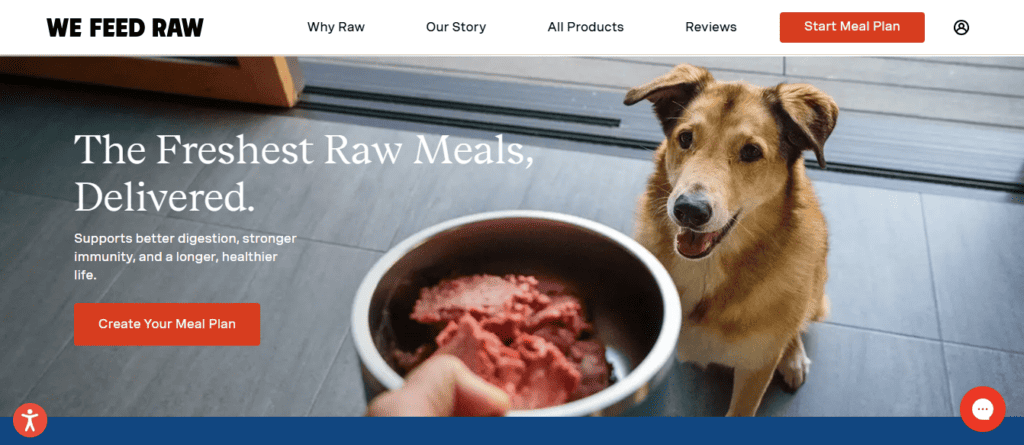
We Feed Raw makes frozen raw patties built mainly around muscle meat, organ meat, and fresh uncooked bone. The recipes come in beef, chicken, turkey, duck, and lamb. Animal ingredients are the base of every recipe, and there are no fillers, preservatives, or carb-heavy binders in the food.
Safety
We Feed Raw uses high-pressure processing (HPP) along with HACCP-based safety procedures and sourcing and testing controls. HPP applies high pressure rather than heat to reduce or inactivate harmful bacteria while leaving the food uncooked. HPP isn’t a special fix invented for raw pet food, though. It’s a widely used process in the human food industry, applied to things like juices, deli meats, and guacamole for the same reason.
Practical Considerations
The food comes in two formats. The frozen patties need freezer space; you thaw what you need and portion it out, and portions are meal-sized for your specific dog to make that easier. There are also freeze-dried raw nuggets, which are shelfstable and can be scooped and served like kibble. The nuggets are complete meals on their own, not toppers, so they work as a full-time option for owners who don’t want to deal with thawing, or as a travel and backup option for owners who feed the patties day to day.
Stella & Chewy’s

| Stella & Chewy’s | |
| Format | Frozen raw; freeze-dried raw |
| Raw or Cooked | Raw |
| Protein Options | Multiple animal proteins |
| Storage | Freezer (frozen); pantry (freeze-dried) |
| Where to Buy | Pet stores and online |
| Best For | Owners who want raw food they can buy in a store |
Stella & Chewy’s is one of the most recognizable raw brands on the market, and it’s often the first raw food people encounter because it’s widely sold in pet stores. The recipes are built around raw meat, organ, and bone and come in a range of animal proteins, so there’s usually an option that works for a dog that does better on one meat than another.
The recipes include added vitamins and minerals, so the food is formulated as complete and balanced, but you’ll want to check the AAFCO statement on the specific product. The lineup includes foods meant to be fed as full meals as well as toppers and mixers that aren’t.
Safety
Stella & Chewy’s uses HPP on its raw products, the same pressure-based pathogen step used on human foods like juices and deli meats, as I said before. As with any raw food, you still handle it carefully at home; keep frozen products frozen, follow the thawing instructions, and wash the bowl and prep surfaces after each meal.
Practical Considerations
The brand’s main draw is storage flexibility. Depending on the product, you can choose frozen raw, which needs freezer space and thawing, or freeze-dried raw, which is shelf stable and can be scooped and served or rehydrated with water. That makes it easier to fit into a routine than frozen-only raw plans and easier to pick up in a store rather than waiting on a delivery.
The Farmer’s Dog

| The Farmer’s Dog | |
| Format | Frozen fresh-cooked meals |
| Raw or Cooked | Lightly cooked |
| Protein Options | Multiple meat-based recipes |
| Storage | Freezer, then refrigerator once thawed |
| Where to Buy | Online—subscription delivery |
| Best For | Owners who want fresh meals delivered but prefer cooked over raw |
The Farmer’s Dog makes lightly cooked, whole-meat-based recipes that are frozen and delivered to your door. Rather than being left raw, the meals are cooked at lower temperatures than kibble production, closer to how you’d cook food in your own kitchen. Meat is the center of each recipe, with vegetables and added nutrients to round it out. Like raw food, these meals are high in moisture, so the protein percentage on the label looks low next to kibble and needs the dry-matter calculation before you compare.
Safety
Because the food is cooked, heat is the main food-safety step, the same approach kibble and canned food rely on. That makes handling at home simpler than raw, though the food still needs to be kept frozen until you’re ready to use it and refrigerated once thawed.
Practical Considerations
You need freezer space for the deliveries and a spot in the fridge for what’s thawed. The food is subscription based, and it generally costs more per day than conventional kibble, with that difference growing as your dog gets bigger.
Best High-Protein Kibble
Kibble is still what most dogs eat, and for practical reasons. It’s shelf stable, easy to portion, easy to travel with, sold almost everywhere, and generally the least expensive way to feed a dog. It also tends to show the highest as-fed protein percentage of any format, considering there’s so little water in it. That doesn’t mean it beats fresh or raw on protein once you run the dry-matter math, though. Below are some of the most common options people choose.
Bully Max
| Bully Max | |
| Format | Dry kibble |
| Raw or Cooked | Cooked (extruded) |
| Protein Options | Meat-based formula |
| Storage | Pantry |
| Where to Buy | Direct and major online retailers |
| Best For | Owners of highly active or working dogs that need extra calories |
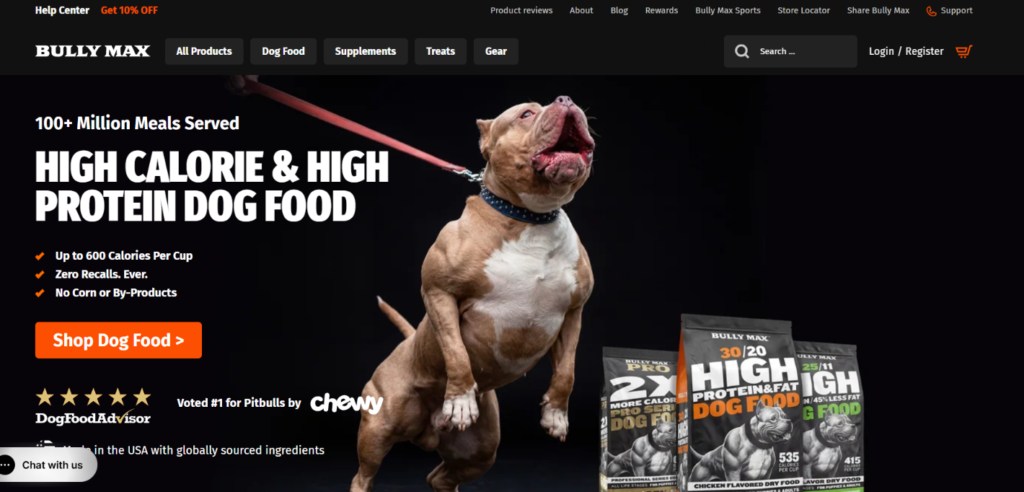
Bully Max is positioned as a high-protein, high-calorie kibble aimed at active, working, and muscular dogs. The marketing leans into muscle and performance, which is why it tends to come up for owners of working breeds and dogs doing a lot of physical activity. The formula is meant to be fed as a complete diet, and it puts protein and fat near the top of the label.
Storage and serving are that of standard kibble. You store it in the pantry and scoop it out when it’s meal time, with no thawing or subscription required. It’s sold directly and through major online retailers.
What to Watch For
Calories per cup matter as much as the protein number here. Because the food is calorie dense, a serving that looks modest can carry more energy than a less active dog needs, and it’s easy to overfeed if you go by the scoop instead of the feeding chart. For a dog that isn’t working hard, this may simply be more food than they need.
VICTOR Hi-Pro Plus

| VICTOR Hi-Pro Plus | |
| Format | Dry kibble |
| Raw or Cooked | Cooked (extruded) |
| Protein Options | Multiple animal protein sources |
| Storage | Pantry |
| Where to Buy | Feed stores, farm supply stores, online |
| Best For | Owners of active and working dogs |
VICTOR Hi-Pro Plus is a traditional high-protein kibble that’s been a go-to for active and working dogs for years. It’s a straightforward meat-based dry food with a higher protein number than most grocery-store kibbles. The recipe uses multiple animal protein sources rather than relying on one, and it’s formulated as a complete diet.
It’s far easier to store and serve than raw or fresh-cooked food, and it’s sold through feed stores, farm supply stores, and online, so availability is good even if it’s not quite as universal as a grocery-store brand.
What to Watch For
Like Bully Max, this is a food for dogs that are actually using the energy. Sporting, herding, and working dogs are the typical audience. A lower-activity dog can still eat it, but portions need to be adjusted down, and the protein and fat levels may be more than a sedentary dog benefits from.
Purina ONE True Instinct
| Purina ONE True Instinct | |
| Format | Dry kibble |
| Raw or Cooked | Cooked (extruded) |
| Protein Options | Meat- or poultry-first recipes |
| Storage | Pantry |
| Where to Buy | Grocery, big-box, and pet stores |
| Best For | Owners who want a higher-protein kibble they can buy anywhere |
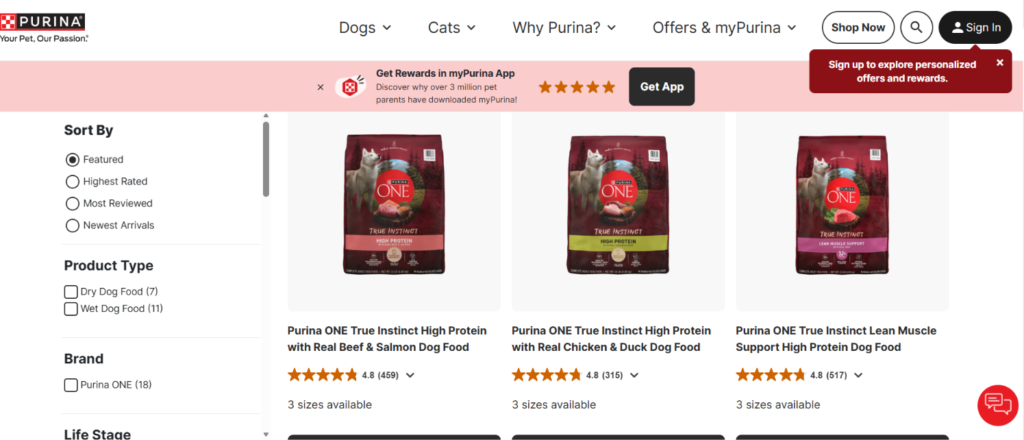
Purina ONE True Instinct is the easiest food on this list to actually buy. It’s on the shelf at grocery, big-box, and pet stores, which makes it a realistic high-protein choice for owners who don’t want to order specialty food or set up a subscription. The line is positioned as a meat- and poultry-forward formula, with real meat or poultry listed as the first ingredient, and it’s formulated as a complete and balanced diet. You just scoop and serve, and it’s also usually the least expensive option on this list.
The protein level is higher than Purina’s standard lines, though below the working-dog kibbles above.
What to Watch For
As a mainstream kibble, it does include more grain and plant ingredients than the raw and fresh foods in this article, so some of the protein number comes from plant sources. That’s normal for kibble; it just means the ingredient list is worth reading so you know where the protein is coming from.
Raw/Fresh vs. Kibble: Which Is Better?
Neither food is better when it comes to protein. The protein number on the bag is the easiest thing to compare, but not really the most reliable, considering it’s measured with all the water still in the food. Compare them straight off the label, and kibble appears to win every time, even when the raw or fresh food has more protein in what your dog actually eats over the day.
That’s why the dry-matter calculation is the single most useful thing you can take from this article. Once protein is compared fairly, what’s left is a practical decision about how you want to feed your dog.
| If this sounds like you . . . | Raw/Fresh | Kibble |
| You want a higher-moisture food that contributes to your dog’s hydration. | ? | |
| You prefer a minimally processed raw diet or a lightly cooked fresh one over extruded kibble. | ? | |
| You have freezer or refrigerator space to give up, and you don’t mind pre-thawing. | ? | |
| Knowing exactly what’s in the food and where the protein comes from is a priority for you. | ? | |
| Convenience matters most, and you want to scoop and serve. | ? | |
| You need something shelf stable that doesn’t depend on a freezer. | ? | |
| Budget is a major factor, especially for a large dog or several dogs. | ? | |
| You want food you can pick up anywhere without ordering ahead. | ? |
If you’re drawn to raw but the logistics feel overwhelming, freeze-dried raw sits in the middle because it’s shelf stable and scoopable like kibble, but it’s still built around raw meat. And nothing says you have to pick one side. Plenty of owners feed kibble day to day and add fresh or raw food on top, or rotate between them.
Whatever you choose, just make sure you’re comparing the right things. If you’re switching your dog from one food to another, make sure this is done gradually over several days, and talk to your vet if your dog has a health condition that diet could affect. Ultimately, the best high-protein food is the one that’s well formulated, fits your routine, and that your dog does well on.