
- Endura Flap vs. RANGER: Which Pet Door Actually Holds Up? - September 11, 2026
- Primal Dog Food Alternatives: Safety, Cost, and Convenience Compared - September 4, 2026
- How to Find the Best Dog Food for Joint Support - August 9, 2026
A dog that spends most of the day lounging around the house has very different nutritional demands from a dog that runs trails, trains in agility, works livestock, hunts, or joins you for long-distance hikes and high-output activity every week.
For active, working, and athletic dogs, food is more than calories in a bowl. Protein quality, fat content, calorie density, and ingredient composition all play a crucial role in recovery, endurance, muscle maintenance, and day-to-day performance. That’s why many owners of high-energy dogs look beyond generic “performance” marketing and pay closer attention to what’s actually inside the food.
What Active Dogs Actually Need Nutritionally

While terms like “active” or “sport” frequently appear on dog food, those labels don’t tell you much about the nutritional profile of the food itself. Some formulas are built around higher protein and fat from animal-based ingredients, while others still rely heavily on carbohydrates and processing methods commonly used in traditional kibble.
It can help to evaluate foods based on what active dogs actually use nutritionally: highly digestible animal protein for muscle recovery, calorie-dense fat for sustained energy, and ingredient quality that supports consistent fueling without unnecessary fillers or excessive carbohydrate load.
To decide what to feed your dog, it’s important to know which ingredients are required and what their ratios should be. The term “dry matter basis” comes up quite a bit, and it’s important to understand what that means. Converting an ingredient from the percentage shown on the label to a dry-matter basis is the only reliable way to compare different diets. You can learn to do the conversion manually, but many free online calculators will do it for you, making it much easier and faster.
Protein: The Core Building Block
Most dog owners have heard how important protein is for their dog. When comparing different foods, protein is where most of the critical differences are evident. Dogs that do consistent, demanding physical work have muscles that need protein for maintenance, repair, and recovery. It’s also not just about any protein or its percentage. The source and quality matter tremendously.
Protein percentage: If you’re feeding an athletic or working dog, you need to feed at least 28 – 30% protein on a dry matter basis. Some diets, such as high-performance formulas and raw diets, may be much higher.
Protein source: Dogs need muscle meat, not meat byproducts or plant-derived protein fillers; animal-based protein provides the amino acid profile dogs need.
Digestibility: If a dog can’t fully absorb what they’re eating due to inadequate digestibility, then raising the protein percentage isn’t going to be enough. You need bioavailable protein, which is minimally processed, high-quality animal protein, not highly processed alternatives.
Calorie Density
It’s easy to understand that active dogs burn more calories, but it matters how those calories are delivered. High-calorie-density foods allow a dog to get the number of calories it needs without having to eat abnormally large volumes. This is especially important for working dogs. If you have to overload their gut to get the necessary calories because they are eating a lower-density food, they may not feel well or perform as well.
Fat: Energy for Sustained Activity
For dogs who are hunting, herding, or engaging in long trail runs, sustained aerobic work requires dietary fat for their primary fuel source, not carbohydrates. Fat actually delivers two times as much energy per gram as carbs or protein. Trained athletic dogs become very good at metabolizing fat.
- Animal sources such as chicken fat, beef fat, and fish oil are excellent sources of fat, and you should look for foods with moderate to high fat content.
- Fat supports several things, including joint lubrication, coat health, and energy, all of which are necessary for working dogs.
- Sprinting, weight pull, or anything that involves short, intense bursts of activity has slightly different needs, but fat is still an important component.
The recommended AAFCO fat percentage for adult dogs is 5 to 8% on an as-fed basis. Puppies need a bit more fat, at 8-10%. But active or working dogs need far more fat in their diets. It is recommended that they consume approximately 18-22% fat on a dry-matter basis, which is significantly higher than the intake of the general population.
Carbohydrates in Active Dog Diets
Many pet parents are surprised to learn that dogs don’t have a strict biological requirement for carbohydrates in the same way they do for protein and fat. Protein and fat form the core of a dog’s nutritional needs, supporting muscle maintenance and energy metabolism.
So, why do most kibble formulas still contain a significant amount of carbohydrates? It isn’t because dogs require them in high amounts, but because starches and grains are necessary to bind kibble into a stable, shelf-stable form.
For working and athletic dogs in particular, lower-carbohydrate diets are often considered because they place more emphasis on protein and fat as primary energy sources, which more closely reflects a dog’s natural metabolic tendencies.
Dog Food Types: Kibble, Fresh, Raw

For decades, kibble has been the standard choice for dog owners because it’s convenient, affordable, and widely available. But the dog food landscape has changed significantly. Today, some dog parents are looking for fresher, less processed nutrition, while others are specifically interested in raw feeding and higher-protein diets designed around performance and whole-food ingredients.
High-Performance Kibble
Kibble remains one of the most accessible options for active dog owners who want structured nutrition without completely changing their feeding routine.
Purina Pro Plan Sport Performance 30/20
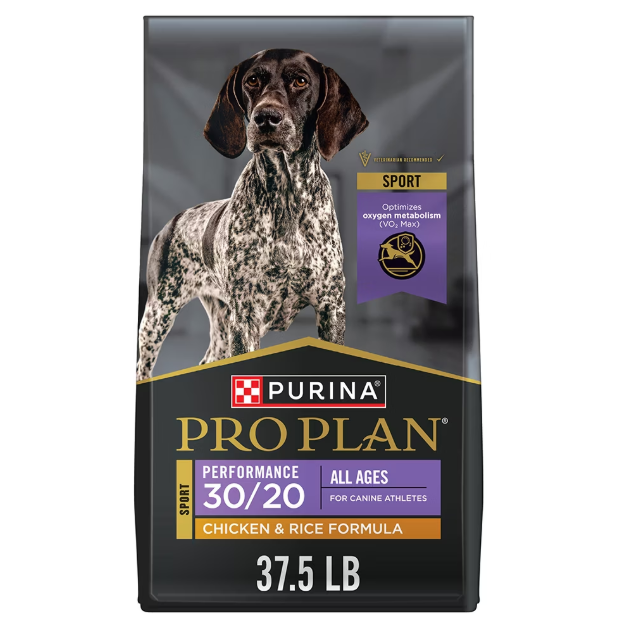
The “30/20” refers to 30% protein and 20% fat, a macro profile designed for high-output and working dogs. Made with real chicken as the primary protein source, it’s calorie-dense enough to support performance without requiring large feeding volumes. It’s also widely available, reasonably priced, and has a long-standing reputation in the performance-dog space.
A common limitation of kibble is extrusion. High-heat processing can alter nutrients, and kibble requires more carbohydrates than dogs biologically need in order to maintain its structure.
Fresh-Cooked Options

Fresh-cooked dog food has grown steadily in popularity over the last several years, particularly among owners looking for an alternative to heavily processed kibble. These diets are typically lightly cooked, refrigerated or frozen, and made with recognizable whole-food ingredients rather than rendered meals and shelf-stable fillers.
Compared to traditional dry food, fresh diets generally undergo less intensive processing, which helps preserve texture, moisture, and ingredient integrity. Many formulas also prioritize real animal proteins alongside vegetables and other minimally processed ingredients, giving the food a composition that feels closer to whole-food nutrition.
While fresh-cooked diets vary significantly between brands in terms of macronutrient balance and calorie density, they can be a practical middle ground for owners who want higher-quality ingredients and lighter processing without transitioning fully to raw feeding.
Spot & Tango
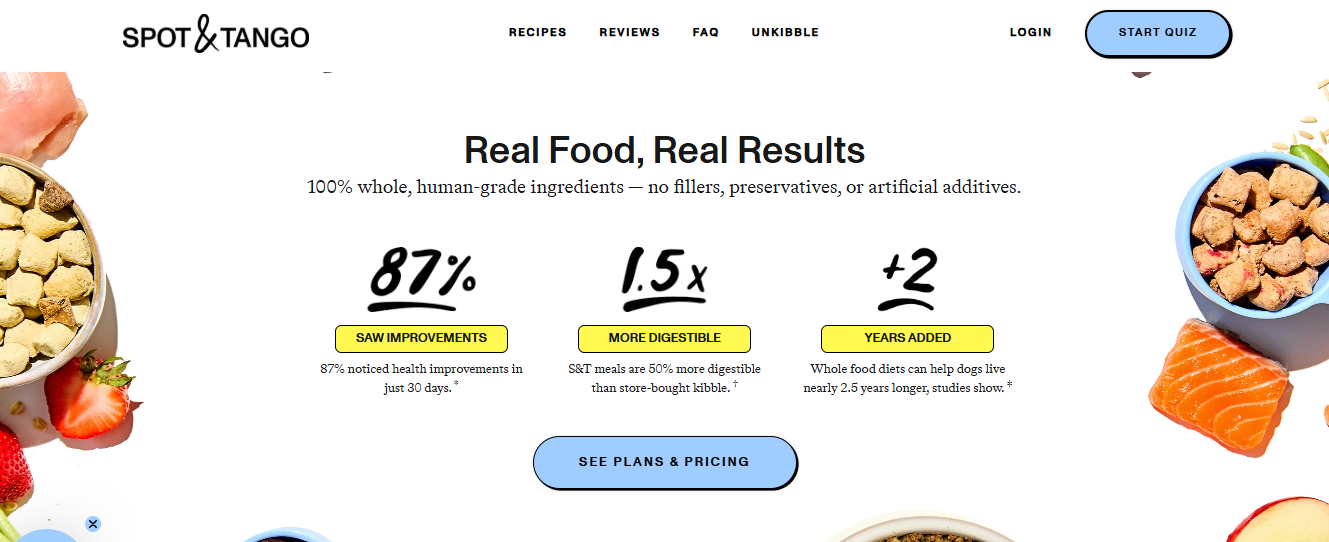
Spot & Tango offers a fresh-cooked dog food approach built around whole-food ingredients and transparent sourcing. Their recipes use real animal proteins like turkey, beef, and fish, while avoiding artificial additives and heavily processed fillers commonly found in more conventional dog foods.
For owners interested in fresher feeding without transitioning fully to raw, the brand sits in a comfortable middle ground. The fresh meals are gently cooked and generally less processed than dry food formats, which appeals to many owners looking for a more whole-food-focused diet.
Spot & Tango also offers a dry food line called UnKibble, designed as a higher-protein, lower-carbohydrate alternative to traditional kibble. While UnKibble can work well for convenience and storage, the fresh recipes still maintain the advantage of lighter processing and higher moisture content.
For moderately active dogs or owners looking to move away from standard kibble without committing to raw feeding, Spot & Tango can be a solid transitional option.
Freshpet

For moderately active dogs, Freshpet can be a reasonable entry point into fresh feeding. The brand offers refrigerated fresh food that’s widely available in grocery stores and pet retailers, making it one of the more accessible options for owners curious about moving beyond traditional kibble.
The recipes are built around real meat as the primary ingredient, and the food is gently cooked rather than processed with the extremely high heat used in many dry foods. That helps preserve texture and gives the meals a fresher, less heavily processed feel overall.
Macronutrient levels vary quite a bit between recipes, particularly when it comes to fat content, so it’s worth reading labels carefully depending on your dog’s activity level and calorie needs. Some formulas are better suited for everyday companion dogs, while others may work better for more active dogs that require additional caloric density.
Raw: The Macro Case for Working Dogs

“Macro dog food” simply refers to dog food that clearly breaks down its macronutrients (protein, fat, and carbohydrates), so owners can better understand what’s fueling their dog in each meal.
Raw diets are typically built around high levels of animal-based ingredients, moderate-to-high fat content, and very low carbohydrates.
For working dogs, sport dogs, and other high-output athletes, those differences are important because protein supports muscle maintenance, while fat provides a steady, energy-dense fuel source during long training sessions, demanding work, or endurance activity. Lower carbohydrate levels also reflect a different macronutrient structure commonly seen across fresh and raw feeding formats.
That doesn’t automatically make every raw diet superior, but it does explain why many handlers and performance-focused dog owners pay close attention to macro composition when evaluating food options.
We Feed Raw
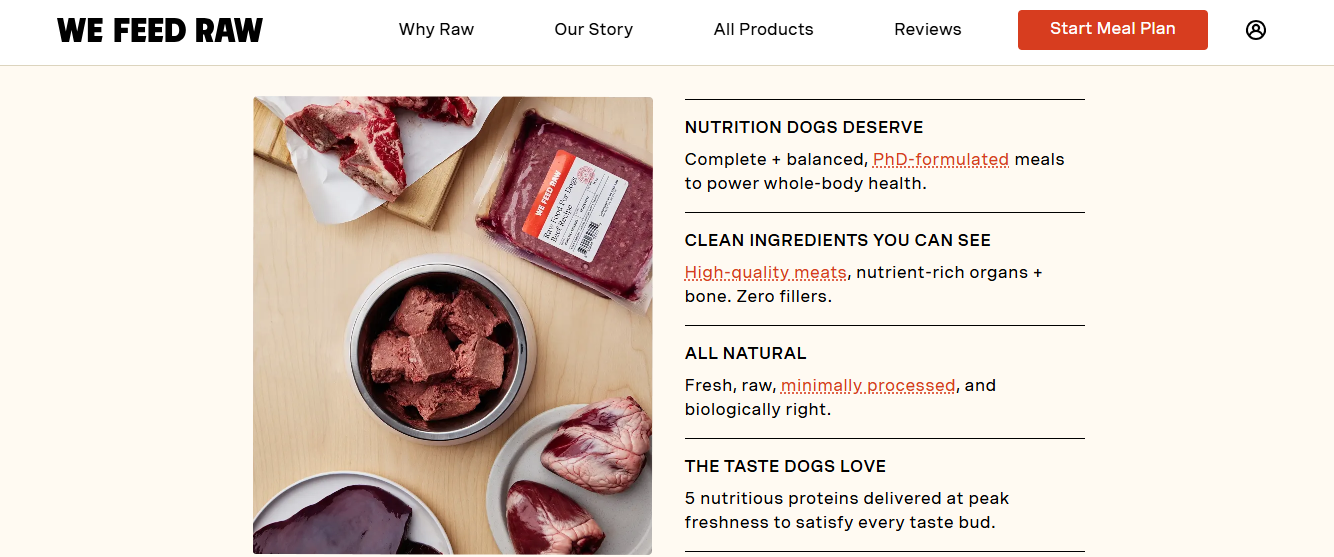
One of the early leaders in the commercial raw dog food space, We Feed Raw delivers frozen, pre-portioned meals directly to your door. The formulas are built around muscle meat, organ meat, and ground raw bone, alongside a targeted blend of vitamins and minerals like zinc, vitamin E, manganese, vitamin D, and flaxseed. The overall composition is especially well-suited for active dogs, including working breeds and high-output athletes that benefit from protein- and fat-forward nutrition. The recipes also avoid fillers, artificial preservatives, and plant-based protein concentrates sometimes used to increase protein percentages in more processed formulas.
Raw feeding is often discussed in terms of handling and formulation, but commercial raw diets differ significantly from homemade raw feeding.
Companies like We Feed Raw use standardized food safety systems adapted from broader food manufacturing, including:
- HPP (High-Pressure Processing): An FDA- and USDA-recognized food safety method originally developed for human food production. Instead of using heat, which can alter nutrients, HPP uses extremely high cold-water pressure to help reduce potential pathogens while preserving the raw nutritional profile.
- HACCP protocols: We Feed Raw follows a Hazard Analysis and Critical Control Points program, a widely used food safety framework designed to identify and manage contamination risks throughout production.
- Clean Label Project recognition: The brand has been included on the Clean Label Project’s Clean 16 list, an independent ranking evaluating products for purity and contaminant standards.
- Customized meal plans: Owners can build personalized feeding plans based on their dog’s breed, age, weight, and activity level, with clear ingredient transparency across the product line.
Macronutrient levels vary slightly by protein source, but on average, the formulas contain roughly 44% protein, 33% fat, and negligible carbohydrates on a dry-matter basis. That profile is commonly considered in performance-focused raw diet comparisons, particularly for dogs with demanding activity levels.
For dog owners interested in feeding a more ancestral-style diet without the complexity of formulating meals themselves, We Feed Raw offers a far more structured and controlled approach than DIY raw feeding. That distinction matters because concerns often associated with raw feeding, including nutritional imbalance and handling risks, are most commonly linked to improperly formulated homemade diets rather than commercially prepared raw foods produced under standardized food-industry safety systems.
Darwin’s Natural Pet Products

Darwin’s is a strong example of a raw diet with a well-balanced macro profile, containing approximately 51% protein, 30% fat, and 10% carbohydrates on a dry-matter basis. For active dogs, those numbers provide a solid nutritional foundation. Their 75/25 meat-to-vegetable ratio also stands out because the formula relies primarily on whole muscle meat and organ meat, while the carbohydrate content comes from vegetables like carrots, squash, and zucchini rather than grains or heavily starchy fillers.
From a composition standpoint, the formulas align well with what many owners look for in a performance-oriented raw diet. However, Darwin’s markets its food for all life stages rather than specifically formulating for athletic or high-output working dogs. In practice, that means owners of highly active dogs may need to pay closer attention to portion sizes and calorie intake to ensure the diet is adequately supporting their dog’s workload and energy expenditure.
Maev Raw Dog Food

Maev is a relatively new company founded in 2020, and their approach centers on clean, human-grade ingredients. Their chicken recipe, for example, contains roughly 48% protein on a dry-matter basis and about 19% fat. The protein content is solid, but the fat level is noticeably lower than what you’ll typically see in many raw diets formulated for highly active or working dogs. Across the product line, carbohydrate levels average around 22%, which is somewhat high for a raw diet, largely due to ingredients like potatoes.
That said, Maev’s streamlined ingredient lists, polished packaging, and focus on human-grade sourcing make it an approachable option for dog owners who are newer to raw feeding. For moderately active dogs, the formulation will likely work well. But for dogs consistently putting in long hours, intense training, or heavy mileage, the lower fat content and comparatively higher carbohydrate load may not provide the same level of sustained energy that richer raw formulas can offer.
The Bottom Line
There’s not one dog food that is right for every active dog, so you should always ask yourself: “Does the food I’m considering match my dog’s activity level and nutritional needs?”
If you have a working dog, a sport dog, or a high-driven athlete and are looking beyond performance kibble, the fresh and raw categories offer nutritional profiles for owners prioritizing high animal-ingredient, low-carb feeding approaches.