
- Endura Flap vs. RANGER: Which Pet Door Actually Holds Up? - September 11, 2026
- Primal Dog Food Alternatives: Safety, Cost, and Convenience Compared - September 4, 2026
- How to Find the Best Dog Food for Joint Support - August 9, 2026
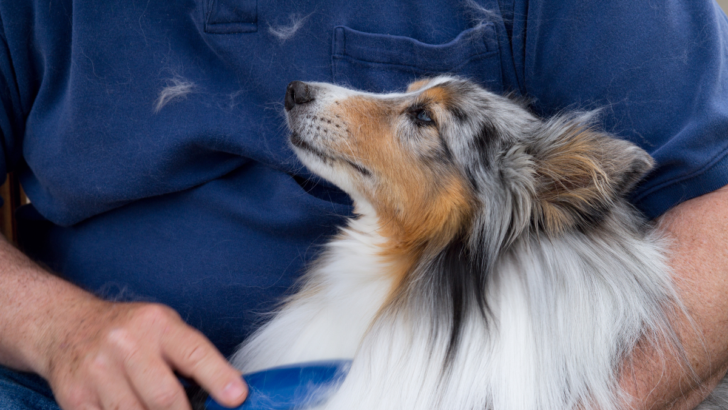
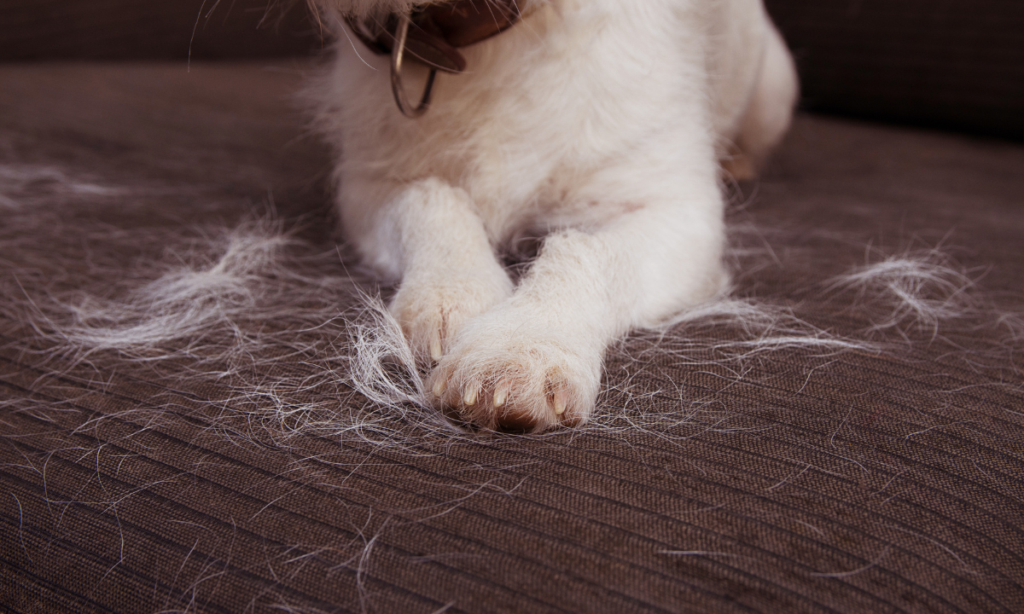
A certain amount of shedding is biologically normal and unavoidable. However, there reaches a point where shedding becomes excessive and is worth a closer look at.
Besides infrequent grooming, excessive shedding can be caused by seasonal changes, stress, age, genetics, illness, or poor nutrition.
If your dog’s shedding is rooted in a nutritional imbalance, you should first accept that no one diet will magically stop shedding. With that being said, I’ve talked to several pet owners in my vet practice who have switched their dogs to food with higher meat content, higher omega fatty acid levels, and fewer heavily processed fillers, and one of the first things they noticed was an improvement in their pet’s coat.
Let’s talk about why that makes sense, what nutrients are necessary for a healthy coat, how the degree of food processing may influence shedding, and which commercial diets stand out for improving coat and skin concerns.
What to Look For in a Dog Food for Shedding
High-Quality Animal Protein
A substantial amount of a dog’s daily protein intake goes toward keeping their skin healthy and maintaining a resilient coat. Their hair or fur is primarily made up of the protein keratin, which builds and maintains hair structure, skin integrity, and muscle tissue.
Identifiable animal proteins, especially muscle meat, provide a richer source of those building blocks than diets that are built around starches or lower-quality fillers. I believe this is why, as a vet, I’ve seen dogs fed high-protein, meat-focused diets displaying shinier coats and reduced visible shedding.
However, it’s less about how much protein you feed than it is about feeding biologically useful protein — and that comes from quality animal sources.
Organ Meat and Nutrient Density
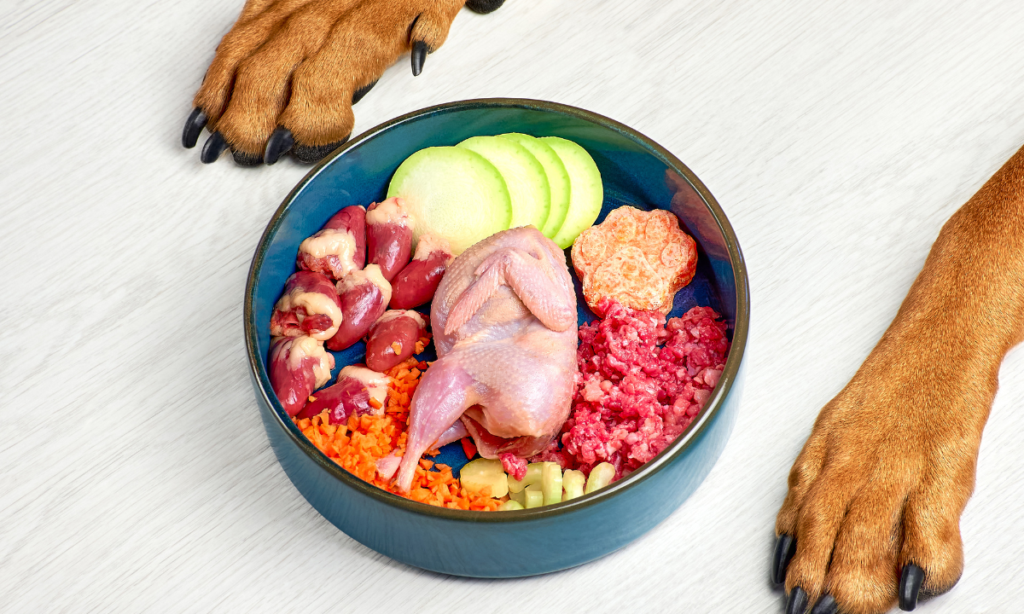
Organ meats are naturally rich in nutrients such as zinc, iron, vitamin A, selenium, and B vitamins, which play essential, interconnected roles in keeping a dog’s coat lustrous and their skin healthy.
The addition of these vitamins and minerals leads to:
- Normal skin cell turnover
- Healthy oil production
- Hair follicle function
- Overall skin barrier integrity
While a high-quality commercial diet usually provides adequate levels by synthesizing these nutrients, targeted nutrients can go a step further to prevent hair loss, dullness, and scaling. That’s why many fresh and raw diets incorporate organ meat as a primary ingredient rather than fortifying them with synthetic versions of those nutrients.
Omega Fatty Acid Balance
Skin cells also need fatty acids and trace nutrients to keep the skin barrier intact and maintain normal moisture balance. Healthy fats play a particularly important role in coat appearance, with Omega-3 fatty acids supporting skin hydration and normal inflammatory balance, while Omega-6 fatty acids maintain the skin barrier and coat texture.
That’s why, if a diet is low in animal-based nutrients or relies too heavily on ultra-processed ingredients, the first place you may see the effects is in the skin and coat. Conversely, increased omega fatty acid intake can improve a dog’s coat within 28 days, including softer hair/fur, less visible shedding, and improved shine.
These fatty acids can be obtained from a variety of sources, including fish oil and flaxseed. Flaxseed in particular is popular and part of several fresh/raw diets because it provides plant-based Omega-3 fatty acids while simultaneously supporting a balanced fiber intake.
Why Processing Levels May Matter
A popular topic of discussion these days in pet nutrition circles is processing intensity.
Traditional kibble undergoes extensive processing, including grinding, extrusion, and repeated heat exposure. It can still meet AAFCO nutritional standards, but there’s no question that many of the nutrients are lost for good.
Fresh and raw diets, on the other hand, tend to use minimally processed animal ingredients, and the reduced processing may preserve ingredient integrity in ways that differ from those in ultra-processed dry food. Indeed, many dog parents I’ve spoken with are turning to less-processed feeding approaches when they have skin and coat concerns.
From a scientific perspective, this makes sense. Skin and fur are rapidly renewing tissues, so nutritional changes are more likely to be seen externally before they are observed in other body systems.
Lesser-processed foods aren’t clinically proven to reduce shedding (although most pet owners believe diets like raw food are safe and result in improved coats, better muscle mass, and cleaner teeth), but if your dog is having skin and coat problems, including shedding, this may be a diet worth trying. The nutrient profile already covered tends to show up strong in the fresh/raw category of dog food, and in my opinion, it’s a strong place to start.
The Best Dog Foods for Shedding
To get one thing out of the way right off the bat, there is no perfect diet that’s right for every dog. Different dogs have different needs, such as allergies or digestive issues, and pet parents have their own priorities around convenience or a minimally processed lifestyle. And if you’re looking for a diet designed to reduce shedding in dogs, there’s not yet any concrete scientific evidence to back this up.
What we can do is look at the nutritional makeup of a healthy coat, as above, and narrow down the available commercial diets into what will likely make the most difference in a dog that’s shedding too much.
With that being said, if you’re looking for a diet to help your dog’s skin and coat, the following foods stand out based on their ingredient profiles, inclusion of meat, and skin- and coat-focused formulation approaches.
We Feed Raw (Frozen Raw)
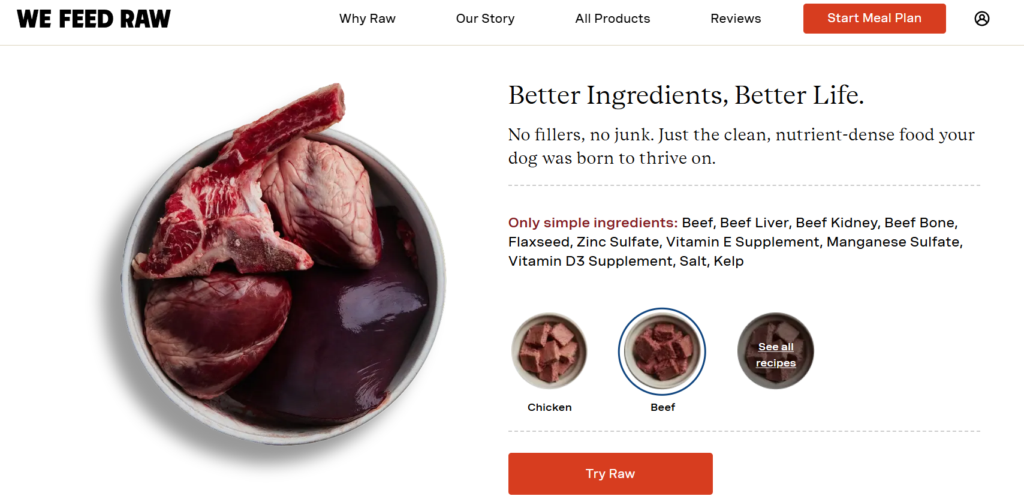
We Feed Raw builds their raw diets around ~80% muscle meat, 10% organ meat, 10% ground bone, and additional vitamins and minerals.
The diet involves minimal processing, is low in carbohydrates, and doesn’t have heavy fillers or binders. The small targeted additions of flaxseed (giving Omega-3 support), zinc, vitamin E, manganese, and vitamin D3 also contribute to complete and balanced nutrition while maintaining a fresh-meat-focused foundation.
This aligns with the “prey model” of raw feeding, which many dog parents ask me about when looking for a more natural nutrient profile.
That said, this feeding approach asks more of the owner than a bag of kibble does. The food ships and stores frozen, so you need freezer space and have to thaw and portion each serving, and raw handling calls for sensible kitchen hygiene. It also costs more than most traditional dry foods, and the diet is delivered through a subscription, which not every household will want to commit to.
Pros:
- High in animal protein and organ meat, with strong overall nutrient density
- Minimal processing and low in carbohydrates, with no carb-heavy fillers or binders
- Targeted flaxseed, zinc, vitamin E, manganese, and vitamin D3 for omega and micronutrient support
- Multiple protein options, a subscription service, and robust safety features
Cons:
- Requires freezer storage and thawing/handling, which is less convenient than dry food
- Generally more expensive than traditional kibble
- The subscription model may feel inflexible to some owners
Spot & Tango UnKibble (Minimally Processed Kibble/Fresh Hybrid)
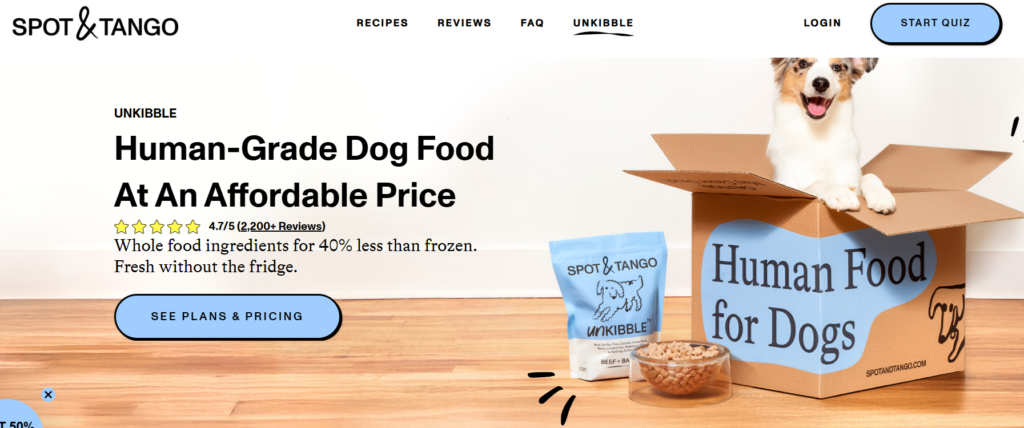
In between traditional kibble and fresh food sits Spot & Tango Unkibble. It’s minimally processed and gently dried rather than fully extruded, has a higher meat content and more visible whole-food ingredients than many other dry foods, and lacks the rendered meats or artificial fillers found in standard commercial kibble.
It’s easier to store and handle than frozen raw diets and therefore offers some of the convenience of shelf-stable food while moving a little closer to a fresh-feeding philosophy.
The downside includes the cost, which is noticeably greater than traditional kibble yet generally cheaper than fresh-frozen options. Also, you are locked into a subscription, which some pet parents find inflexible.
Pros:
- Gently dried rather than fully extruded, so less intensively processed than standard kibble
- Higher meat content made with 100% whole, fresh ingredients, with no rendered meats or artificial fillers
- Shelf-stable and easier to store and handle than frozen raw
Cons:
- Noticeably more expensive than traditional kibble (though generally cheaper than fresh-frozen)
- Subscription model that some users won’t want
Stella & Chewy’s (Freeze-Dried and Frozen Raw)
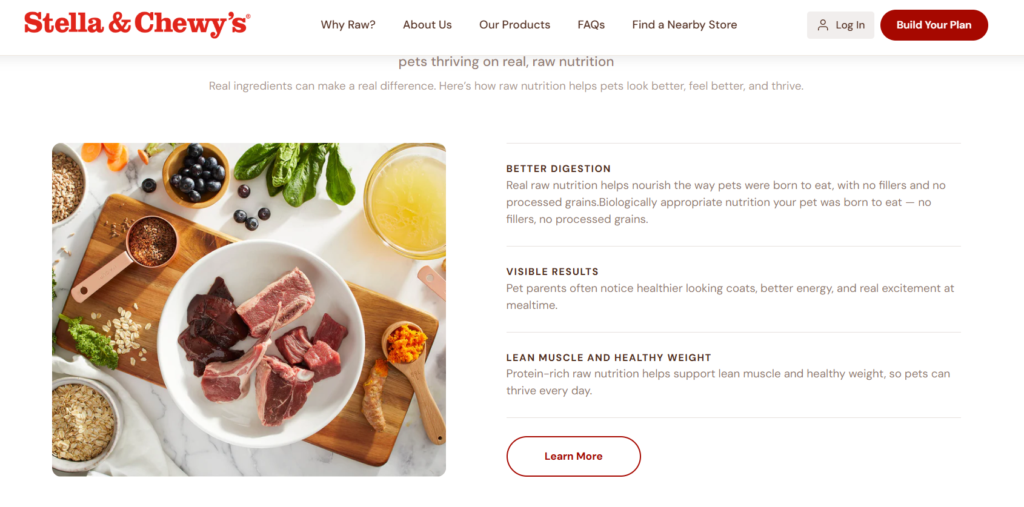
Stella & Chewy’s is another well-known name in the minimally processed feeding space. They offer freeze-dried and frozen raw options, and their diets are heavily based on animal proteins like organ meats, which are at the heart of the nutrient profile that wants to support healthy skin and coats.
The brand also offers limited-ingredient and grain-free options, helping dogs with food sensitivities that would otherwise contribute to poor coat quality. Naturally, results will vary between individual dogs. For example, dogs with sensitive digestive systems may find their formulas too rich or calorie-dense. It’s also worth noting that the cost and freezer storage requirements may be drawbacks for some households.
Pros:
- Freeze-dried and frozen raw options that are heavily animal-protein based, including organ meats
- Omega-3 and Omega-6 fatty acids from salmon oil and flaxseed to support coat condition and reduce dryness
- Limited-ingredient and grain-free options for dogs with food sensitivities
Cons:
- Formulas may be too rich or calorie-dense for dogs with sensitive digestion
- Cost and freezer storage requirements may be drawbacks for some households
Primal (Freeze-Dried and Frozen Raw)
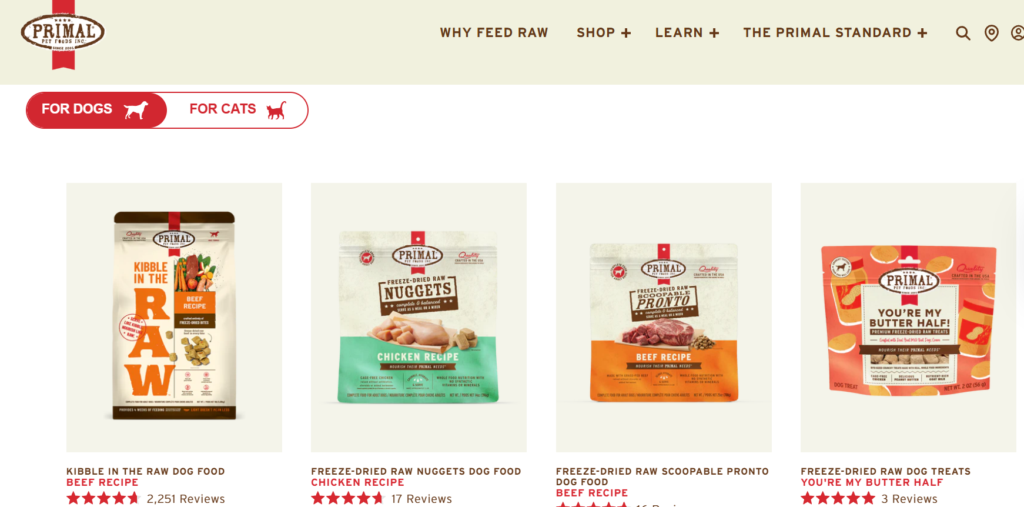
Primal is another frozen and freeze-dried raw food that leans heavily on meat with minimal processing. The emphasis is on animal-based ingredients, lower carbohydrate intake, and nutrient density from whole-food sources — the meat-forward profile that tends to be anecdotally best associated with skin and coat support.
It also features naturally occurring fatty acids found in ingredients such as sardines, salmon oil, and other omega-rich sources, which should help maintain skin hydration and possibly reduce brittle hair and excessive seasonal shedding.
Like with other frozen options, they need freezer space and have to be fully thawed before serving. It also sits in the premium price range, and its comparatively high fat content may be too rich for dogs with sensitive digestion or a tendency to put on weight.
Pros:
- Meat-heavy, minimally processed frozen and freeze-dried raw options
- Animal-based ingredients with lower carbohydrate intake and whole-food nutrient density
- Proteins raised without antibiotics, steroids, or added hormones, with no artificial additives or synthetic vitamins
- Fatty acids from omega-rich sources like sardines and salmon oil to support hydration
Cons:
- Freezer storage and handling are required
- Tends to cost much more than conventional kibble
- Comparatively high fat content may be too rich for some dogs
Purina Pro Plan Sensitive Skin and Stomach (Traditional Dry Kibble)
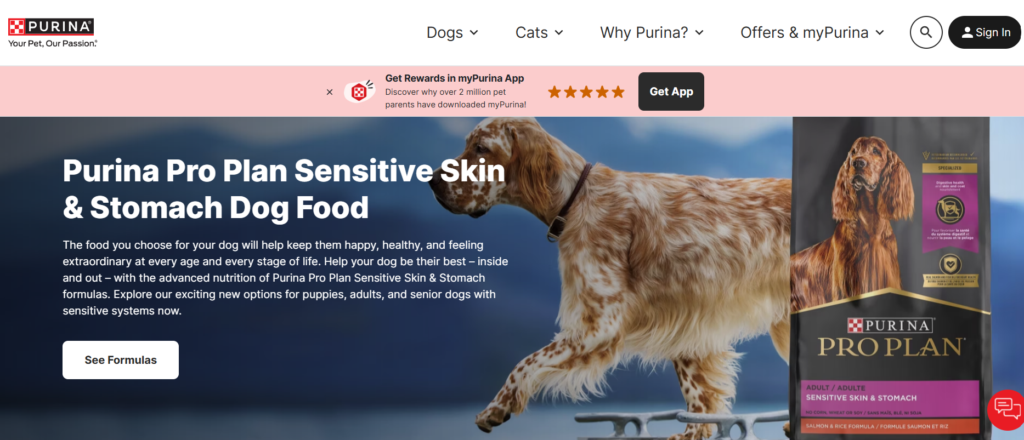
Finally, in the traditional kibble category, Purina Pro Plan Sensitive Skin and Stomach is one of the most popular convenient options for coat and skin concerns. The company’s diets are extensively formulated and backed by a large team of veterinary nutrition researchers.
Because many of their recipes feature salmon as the primary protein source, they may help support skin hydration and coat condition due to the Omega-3 fatty acids. So if your dog has dry skin and mild sensitivities, this diet may be a very practical and accessible option.
Of course, it is a heavily processed dry food with a much higher carbohydrate load — which dogs have no need for and can lead to weight gain, diabetes, joint problems, and other conditions. Some of Purina’s formulas also include grains or other ingredient combinations that may not be good for dogs with food sensitivities.
However, for kibble feeders looking for a skin-based formula, Purina Pro Plan Sensitive Skin and Stomach is one of the more popular choices. It’s also widely available, and it’s more convenient to manage than frozen feeding.
Pros:
- Salmon-forward recipes provide Omega-3s that may support skin hydration and coat condition
- Widely available, shelf-stable, and far more convenient than frozen feeding
- Extensively formulated and backed by a large team of veterinary nutrition researchers
Cons:
- Heavily processed dry food
- Higher carbohydrate load than fresh/raw diets, which can contribute to weight gain, diabetes, and joint problems
- Some formulas contain grains or ingredient combinations that may not suit dogs with food sensitivities
Taking Care of Your Pet’s Coat
These pet foods might help your dog develop a more resilient coat and shed less. Of course, it’s important to remember that excessive shedding can be caused by anything from poor grooming to illness. Improved nutrition can support skin and coat health, but it can’t correct many underlying medical conditions, so check with your vet before making any changes.
Once you’ve decided to make changes to your pet’s diet, take the time to thoroughly research your options and make the best choice for your canine friend. In my opinion, We Feed Raw stands out for using minimal processing without adding carb-heavy fillers, and including muscle meat, organ meat, and targeted omega fatty acid support from ingredients like flaxseed.
While these ingredients and actions have not been clinically proven to reduce shedding, these nutrients are vital for a healthy coat, and it makes sense to prioritize a diet that preserves as many of these components as possible.
Other things you can do to support healthy skin and coat function include:
- Brushing and bathing them regularly
- Keeping them well-hydrated
- Maintaining a healthy weight
- Staying up-to-date on parasite prevention
- Scheduling regular veterinary appointments
If you notice itching, odor, redness, bald patches, or skin irritation, or if their appetite, weight, or behavior has changed, take your dog to the vet.