
- Best Energy-Efficient Dog Doors - September 5, 2026
- Best Insulated Dog Door Brands for Cold Weather - September 3, 2026
A dog door really only has to do two things. It needs to open easily enough that your dog will use it without a fight, and it needs to close tightly enough that you aren’t paying to heat or cool your yard through a hole cut into the side of your house. In a mild climate with a small flap, that tension barely comes into play. Cut an XL opening straight into conditioned living space somewhere with a long winter, and the quality of the seal gets a lot harder to ignore.
The trouble is that “energy-efficient” gets applied loosely across this category, and it doesn’t mean the same thing from one manufacturer to the next. Some doors add extra flaps, some rely on magnets to pull the flap shut, some use insulated cores or frame materials that don’t conduct heat as readily, and a small number back up their claims with published test results instead of just describing the construction. Those approaches can all help, but since they aren’t measuring the same underlying problem, comparing one door’s marketing claim to another’s is harder than it should be.
At a Glance
| Dog door | Why it made the list |
|---|---|
| PetSafe Extreme Weather | Lower-cost multi-flap insulation |
| Endura Flap Door Mount | Magnetic closure that holds up in wind, with a double-flap option |
| RANGER Pet Doors | Publishes air-leakage and thermal test numbers |
| Ideal Pet Ruff Weather | Deep double-flap air gap without the premium price |
How to Shop for an Energy-Efficient Dog Door
A few details are more useful than an “extreme weather” label on the box:
- Start with the seal. A thick flap can still be drafty if air slips around the edges. Magnets and perimeter seals help the flap return to a tighter closed position after each use.
- Check the insulation. Insulated cores and air gaps between multiple flaps can slow heat moving through the door itself.
- Look at the frame. Aluminum conducts heat more readily than PVC and similar materials, so the frame can add to heat loss even when the flap is closed.
- Check for testing. Air-leakage tests look at how much air gets through the closed assembly, while U-factor testing looks at heat passing through the materials.
- Think about size and location. A large opening into heated living space has a much tougher job than a small flap leading into a garage or mudroom.
- Pay attention to installation. Gaps around the rough opening can let air around the pet door even if the flap itself seals well.
PetSafe Extreme Weather
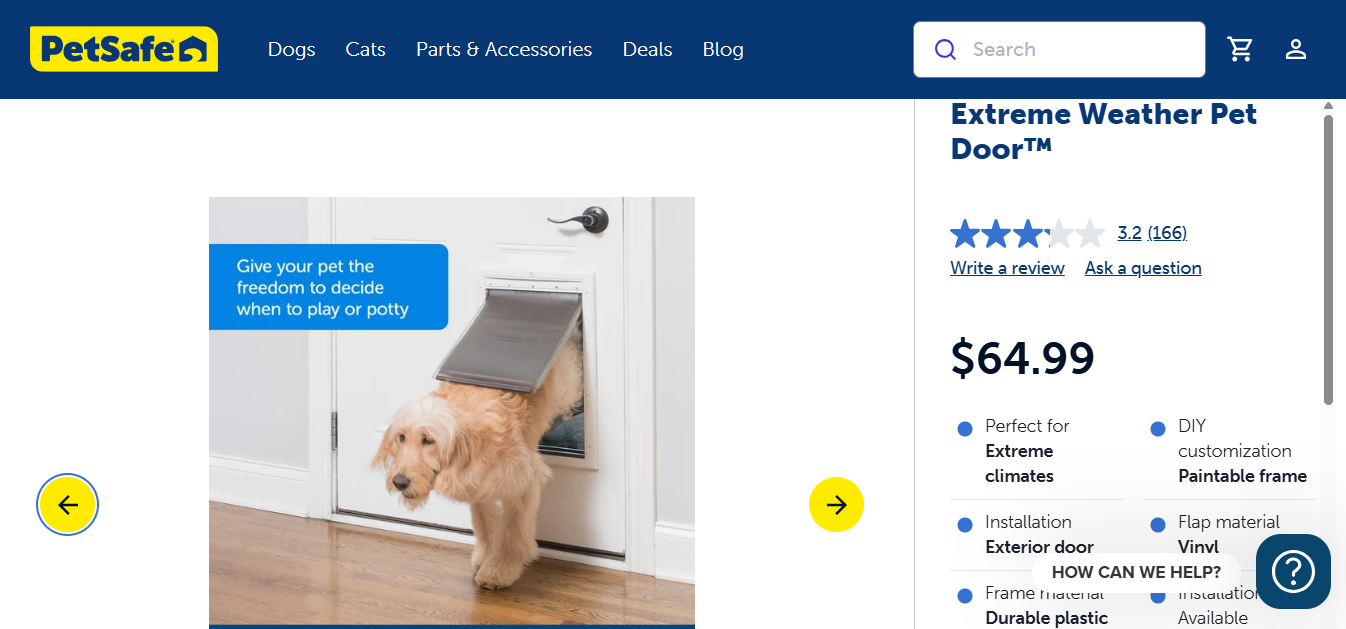
Starting price: $64.99
This is probably where most people start, since it’s the obvious step up from the basic single-flap door a lot of us grew up with. The current design uses three flaps, including an insulated one in the center, and PetSafe claims it’s 3.5 times more energy efficient than its traditional single-flap doors. That 3.5x figure compares the Extreme Weather model with PetSafe’s own traditional single-flap doors, not Endura or RANGER, so it doesn’t work as a direct ranking between brands.
Instead of one thin sheet of vinyl separating the house from outside, several layers and an insulated center section slow heat transfer through the opening. For a garage, mudroom, screened porch, or a home in a milder climate, that may be enough improvement without jumping into the cost of a premium pet door.
I grew up with something close to the basic version of this door, and this is roughly the upgrade I would have expected before looking into the category more closely: more material between the house and the weather, without turning the pet door into a major home project. The bigger question in colder climates is how tightly the flap seals. The efficiency claim still does not tell you how much air may get around the edges when the door is closed.
Sizing also deserves a check before ordering. The Extreme Weather line tops out at Large, with a 10 1/8-by-16 1/4-inch flap opening for dogs up to 100 pounds, so owners of giant breeds may need another PetSafe model or a different manufacturer.
Endura Flap Door Mount
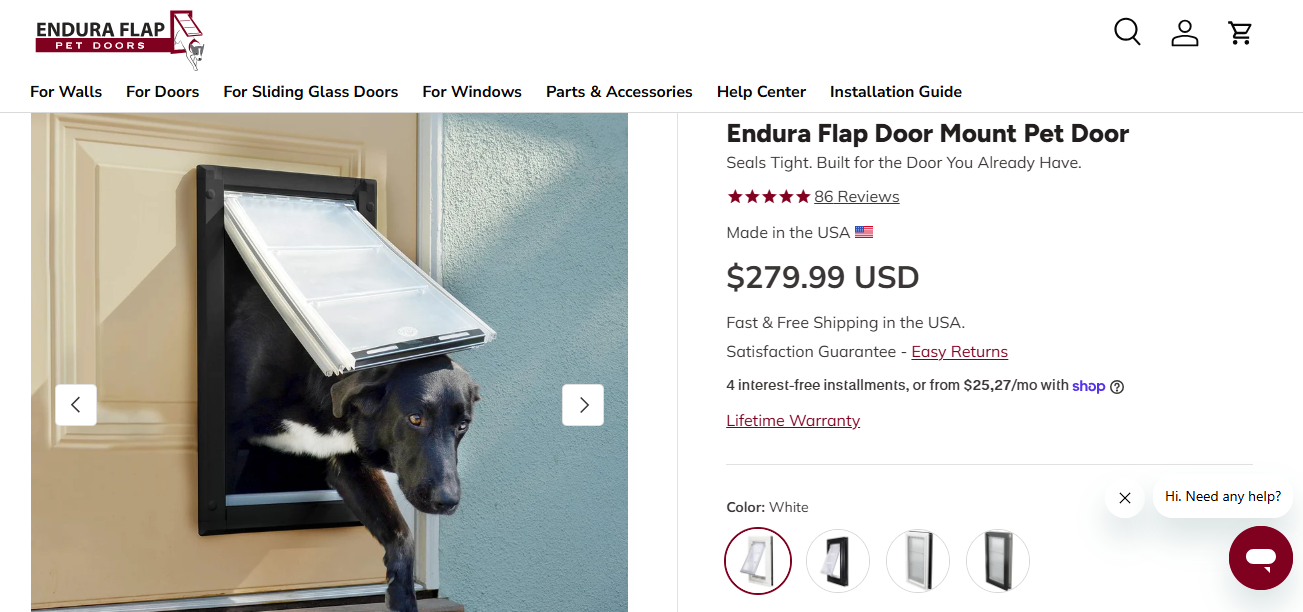
Starting price: $279.99
Endura is aimed more directly at wind and sustained cold. The door-mounted models come in single- or double-flap configurations, and magnets pull the flap back into position after the dog passes through. The magnet strength is adjustable, which is important for both weather resistance and usability. More magnetic resistance can help the flap stay seated in wind, but a small, older, or hesitant dog still needs to push through it comfortably.
Endura says the flap can withstand gusts up to 50 mph. For a pet door installed on an exposed side of the house, this addresses a very practical failure point: a flap that bows or blows partly open can let outdoor air through even if the material itself is well insulated. The double-flap version adds another layer and an insulating air space between the house and outdoors
Its lifetime warranty is another advantage for a part of the house that gets pushed, bent, and snapped shut repeatedly for years. Endura says the warranty covers normal wear and tear and manufacturing defects, with replacement parts provided for covered failures.
Sizing is also generous. The door-mount version runs from a 6-by-11-inch Small up to a 14-by-27-inch XXL, so Endura is one of the options here that can accommodate very large dogs.
I did not find the same kind of whole-door air-leakage testing that RANGER publishes, so there is less information about how much air gets through once the flap is closed. The wind rating still tells me something important, though: whether the flap is likely to stay seated when a gust hits it.
RANGER Pet Doors
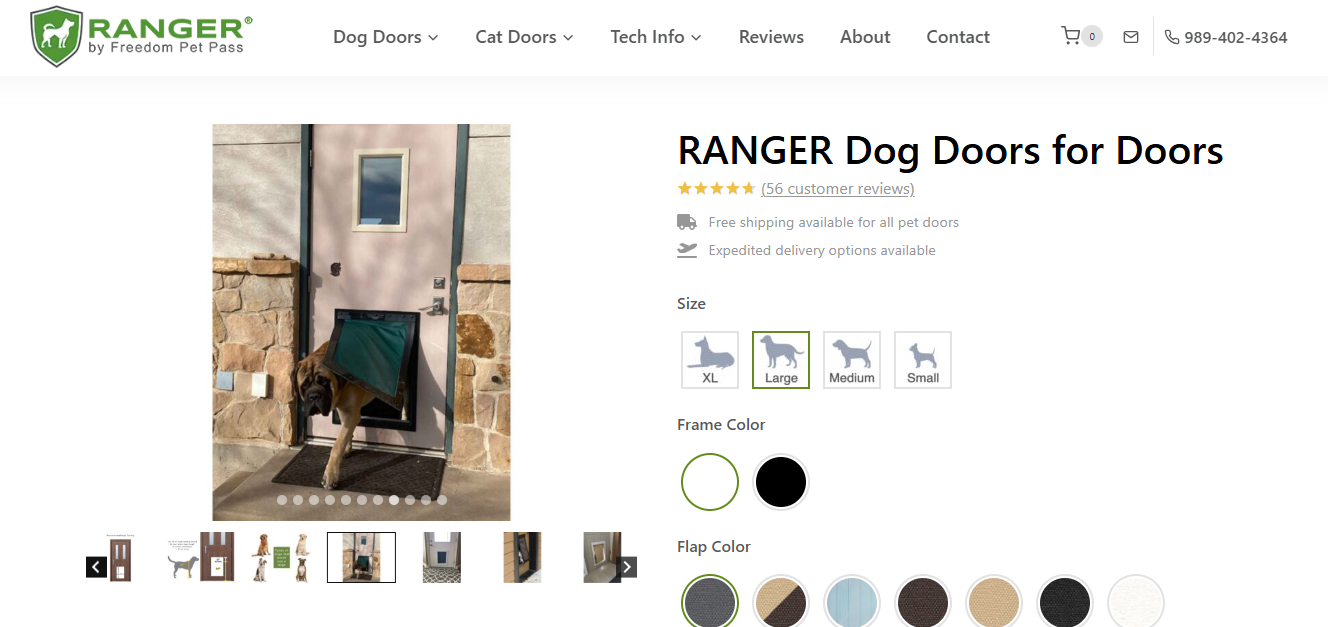
Starting price: $289.00
RANGER Pet Doors was a little different from what I expected to find when I started researching these. I assumed the more serious cold-weather doors would mostly add thicker materials or more flaps. RANGER uses one insulated flap and puts much more emphasis on getting it to seal tightly against the frame after the dog comes through.
The flap has a rubber insulating core, magnets run around the perimeter to pull it closed, and the frame is cellular PVC rather than more conductive aluminum. Those choices all sound good on a product page, but what made me take them more seriously was finding third-party testing on the finished door. RANGER has had its doors tested for both air leakage around the closed assembly and heat passing through the materials themselves.
RANGER was also the only brand I found publishing third-party air-leakage testing on the finished door. In the published third-party test, the door came in well below the U.S. air-leakage limit used for ENERGY STAR-certified human exterior doors. Pet doors are not eligible for that certification, but the human-door standard provides a benchmark for the level of air sealing the tested door achieved.
RANGER also offers a 16-by-23-inch XL opening, so it is another option for giant breeds. It is wider than Endura’s XXL opening, although Endura goes taller at 14 by 27 inches. Our biggest dog is close to 180 pounds, so that size is relevant for us. An opening big enough for him is a substantial cut through an exterior wall or door, with a lot more perimeter where air can work its way around the flap. At that size, how well the door closes starts to tell me more than the number of flaps it has.
RANGER costs more than the lower-priced doors here. For an opening into an unheated garage, paying extra for the tested seal would probably be unnecessary. Put the door straight into a heated living room in Michigan, though, and any air getting around the flap is coming directly into the space you are paying to keep warm.
Ideal Pet Ruff Weather
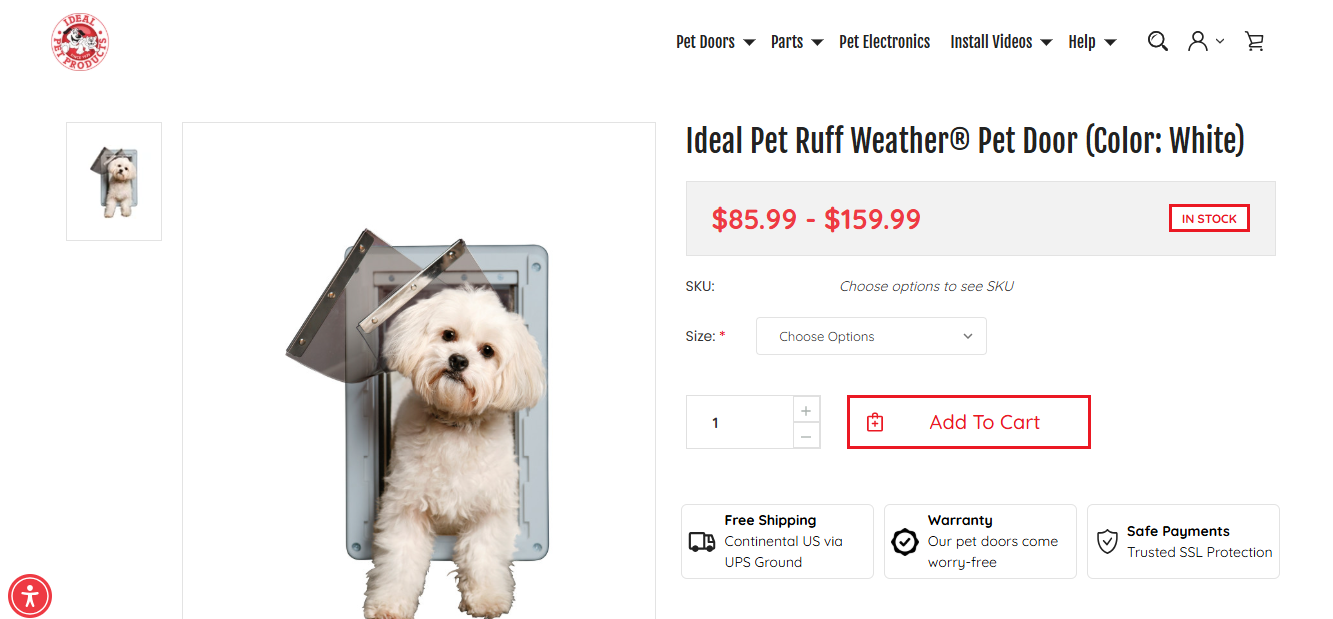
Starting price: $85.99
Ideal offers a double-flap design at a considerably lower price than Endura or RANGER. The two vinyl flaps sit three inches apart, creating an air pocket between them that helps slow heat transfer through the opening.
That extra space adds insulation because heat has to pass through the first flap, the trapped air between them, and then the second flap before reaching the other side. A pair of flaps mounted very close together would not create the same insulating pocket.
The remaining question is how tightly those flaps seal around the perimeter. The air gap can help with heat moving through the door itself, but it does not tell you how much outdoor air may still get around the edges.
The Ruff Weather line also goes up to a Super Large with a 15-by-23.5-inch opening, which Ideal rates for dogs from 91 to 120 pounds. That puts it close to RANGER’s XL in opening size, while keeping the price considerably lower.
Ideal does not publish a directly comparable standardized whole-door air-leakage result in the product information I found. For a shopper replacing a basic single flap on a tighter budget, the three-inch air pocket adds another insulating layer without pushing the price into Endura or RANGER territory.
Which One Should You Buy?
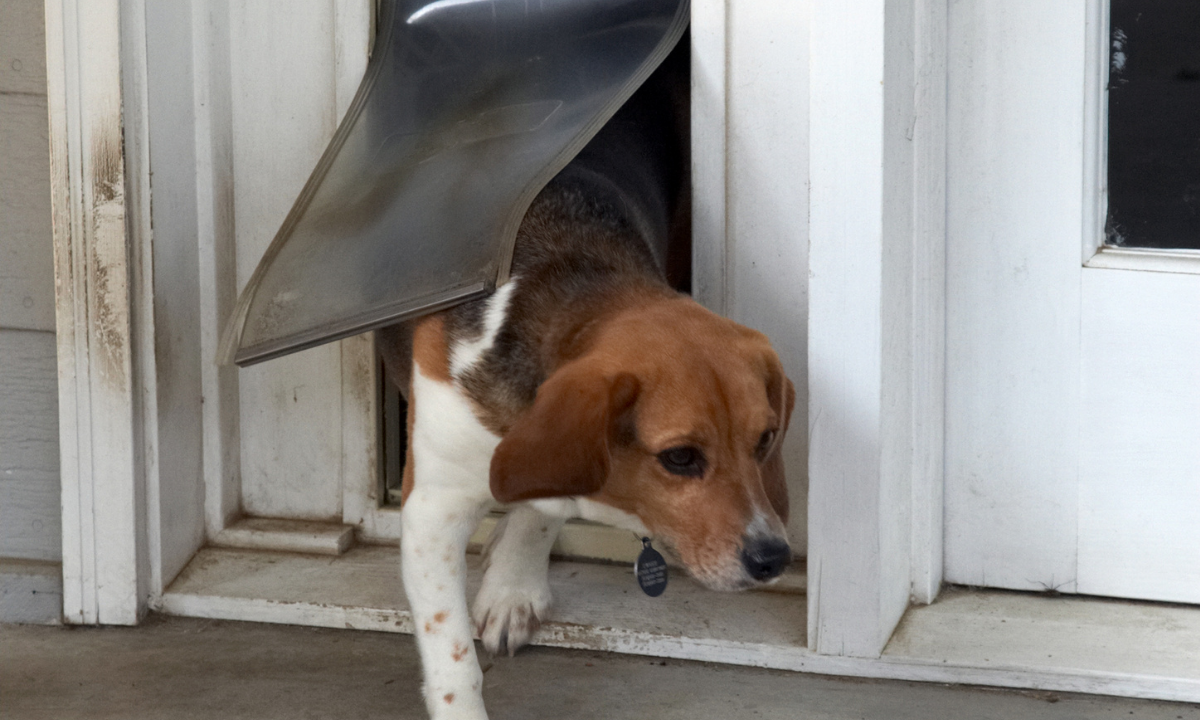
Start with where the dog door is going, not which product has the longest feature list. An opening into an unheated garage can tolerate more heat loss than one cut directly into a heated living room. Wind exposure, the size of the opening, and how cold your winters get should narrow the field before price does.
For larger dogs especially, I would pay close attention to how the flap returns to the frame after every use. A bigger opening creates more perimeter where gaps can develop, so adding another flap is not automatically the same thing as getting a tighter seal.
Installation belongs in that decision too. Air slipping around the rough opening bypasses whatever insulation or sealing system you paid for, so careful measuring and sealing can have as much effect on the finished result as the door you choose.