
- Best Energy-Efficient Dog Doors - September 5, 2026
- Best Insulated Dog Door Brands for Cold Weather - September 3, 2026
I used to think an insulated dog door was basically a regular dog door with a thicker flap. Once I started looking at them more seriously, I realized there are quite a few ways manufacturers try to keep outdoor temperatures from following the dog inside.
Some use several flaps with air trapped between them. Others put insulating material inside one heavier flap. PlexiDor skips the soft hanging flap almost entirely and uses rigid panels. Even the frame can change how much heat moves through the opening.
That is worth paying attention to at our house. We live in Michigan, our dogs are large, and we are currently looking at replacing an existing pet door with a window directly above it. Cutting a new opening is not something I want to do twice because I picked a door based mostly on a reassuring winter-themed product name.
These are the brands worth taking a closer look at.
The Short Version
| Brand/door | Starting price | Insulation approach | Why I’d look at it |
|---|---|---|---|
| PetSafe Extreme Weather | $64.99 | Three-flap system with an insulated center layer | Lower-cost upgrade from a basic flap |
| Hale Door Model, Double Flap | $273 | Two flexible flaps with an insulating air space | Lots of sizing and installation choices |
| PlexiDor Door Series | $522 | Rigid swinging panels | A different style, especially for larger dogs |
| Endura Flap Door Mount, Double Flap | $392 | Two insulated flaps with an air pocket between them | Strong cold-weather and wind performance |
| RANGER Dog Doors for Doors | $289 | Insulated synthetic-rubber flap and cellular PVC frame | My pick for a cold-climate exterior opening |
What Actually Helps a Dog Door Insulate?
A thicker flap can help, but it is only one part of the picture. Insulation works by slowing heat transfer, and dog doors can do that in a few different ways.
- Trapped air between layers: When air is held still between two layers, it does not move heat as quickly, which is part of why double-flap designs can insulate better than a single thin flap. The same basic idea shows up in double-pane windows.
- The frame material: Metal conducts heat much more readily than materials such as cellular PVC, which means the frame itself can become a path for heat to move through. In cold weather, that can let more indoor warmth transfer toward the outside even if the flap is doing its job. A more insulating frame helps slow that transfer around the edges of the opening.
- How the flap behaves in cold weather: Some flexible materials get stiffer as the temperature drops, which can make it harder for the flap to swing freely and settle back into place after the dog passes through. If it curls, warps, or does not sit where it is supposed to, you can end up with small gaps around the opening. Even a flap with decent insulating properties still needs to stay flexible enough to close properly in the temperatures you expect it to handle.
PetSafe
Extreme Weather
PetSafe’s Extreme Weather line is probably the easiest place to start if you have been living with the thin vinyl flap most of us picture when somebody says “dog door.” The standard Extreme Weather model uses three flaps instead of one, with an insulated center layer between the outside flaps. PetSafe says it is 3.5 times more energy efficient than its traditional single-flap pet doors.
The construction is straightforward: several layers put more material between the indoor and outdoor temperatures, while the center section adds insulation where an ordinary vinyl flap would have very little. I can see this being plenty for a lot of houses. A dog door going into a garage or mudroom in a moderate climate does not necessarily need to become a several-hundred-dollar home improvement project.
The standard Extreme Weather line tops out at a Large, rated for dogs up to 100 pounds, which takes it out of the running for our biggest dog. Some dog owners will not have that problem, though, and for a smaller or medium-sized dog this may cover the size you need without pushing you into a much more expensive door.
Hale Pet Door
Door Model, Double Flap
Hale is where I would look if your dog doesn’t suit standard size charts. The company offers far more opening shapes and sizes than the usual Small, Medium, Large, and XL progression, including tall options and custom sizing. Its Giant opening measures 15½ by 27½ inches.
Weight alone is not a great description of a dog’s shape. A tall, lean, 100-pound dog and a broad 100-pound dog do not necessarily need the same opening. We have dealt with enough giant-dog sizing to know that a generous weight rating can still lead to an opening that looks suspiciously small once you put the dog next to it.
The Hale Door Model is available with a double-flap setup that uses two flexible vinyl flaps with an insulating air space between them. Magnets and weatherstripping help the flaps return to position after the dog passes through.
The frames are aluminum, and Hale sells configurations for doors and walls along with options for less-standard installations. There is also a professional installer network, which could be appealing if your opening has already become complicated before you even order the door.
Hale would move higher on my list if standard size charts were giving me trouble. The range of dimensions is a bigger selling point here than any single winter-performance claim.
PlexiDor
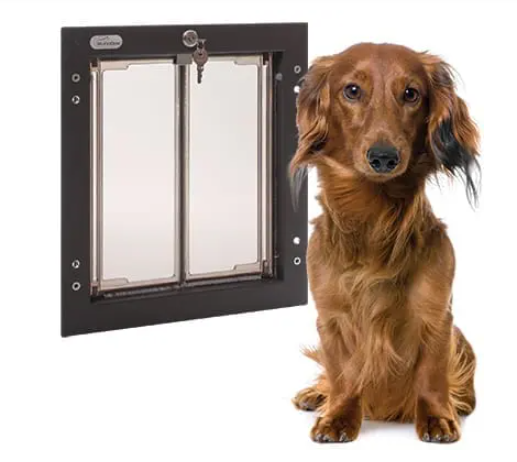
Door Series
PlexiDor is the one brand here that made me rethink what an insulated dog door should look like. Instead of a soft flap hanging from the top, PlexiDor uses rigid panels that swing open from the center. On the larger models, those panels are thick acrylic with aluminum around the edges. PlexiDor also offers sizes for very large dogs.
I can also understand why someone who is tired of flexible flaps stretching, curling, or eventually needing replacement might prefer rigid panels. It is a completely different piece of hardware. I would spend some time thinking about the panels themselves before buying, especially with a cautious dog. A dog that has spent years pushing through a soft flap may need a minute to understand two rigid doors swinging toward it.
PlexiDor would stay on my list for a very large dog or for someone who already knows they do not want another hanging flap.
Endura Flap
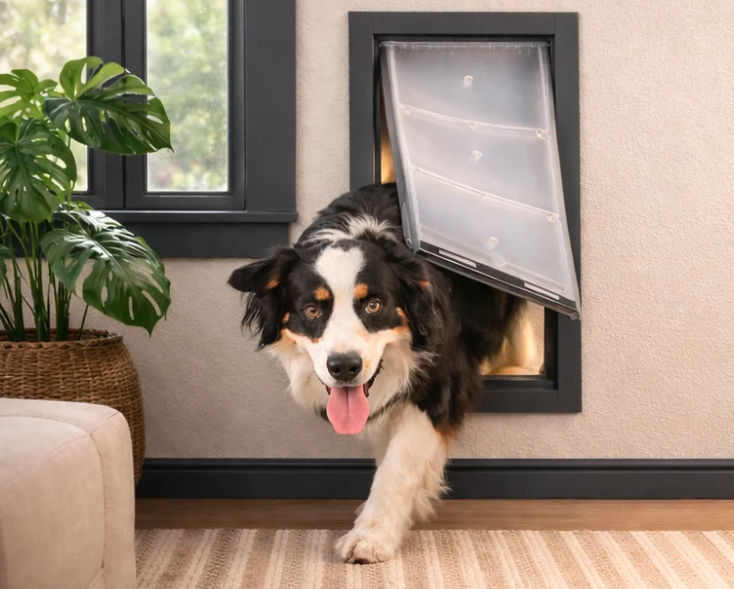
Door Mount, Double Flap
Endura uses a flexible flap made to stay usable in very cold temperatures. The company says the material remains flexible down to -40°F, which addresses a problem anyone who has dealt with cheap vinyl in winter can picture. A flap is not doing much good if cold weather turns it stiff enough that it stops moving and closing normally.
You can buy Endura in single- or double-flap configurations, but the double-flap version is the one I am looking at here because of the insulating air space between the two layers.
Endura also says its flap can stay closed in winds up to 50 mph. The magnets can be adjusted, which lets you change how much force it takes for the dog to push through. I would pay particular attention to that with an older, smaller, or hesitant dog. More resistance may help the flap stay put in rough weather, but the dog still has to open it several times a day.
The door-mounted models currently come with a lifetime warranty, which is generous for something that gets shoved around by an animal over and over for years. Endura would be high on my list in a windy location, especially in a cold climate.
RANGER Pet Doors
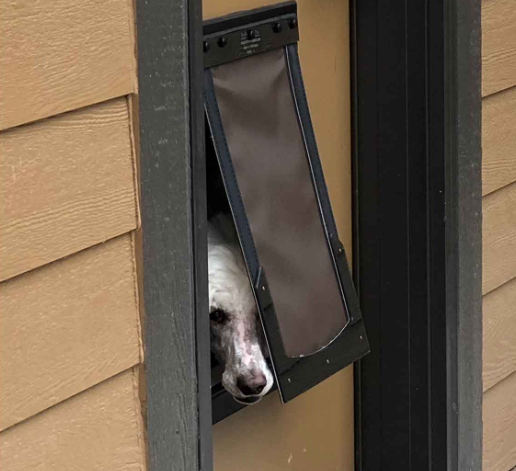
Dog Doors for Doors
RANGER Pet Doors uses a single insulated flap with a synthetic-rubber core protected on both sides by marine-grade canvas. The rubber gives the flap some insulating value while still allowing it to flex as the dog moves through, and RANGER says it stays flexible at -40°C and below.
Instead of aluminum, the frame is cellular PVC, which contains tiny closed cells throughout the material and transfers much less heat than metal. It is also waterproof and will not rust, which are good traits for something installed permanently in an exterior opening. RANGER also uses magnets around the flap to help pull it back into place after the dog passes through.
RANGER has also had the finished door independently tested. One test measures how much air gets through when the door is closed, and another looks at how readily heat passes through the assembly. RANGER says its air-leakage result was 15 times lower than the requirement used for Energy Star-certified human doors.
Which Insulated Dog Door Brand Would I Choose?
For our house, I would choose RANGER. Size changes the calculation quite a bit for us. Our dogs push us toward the larger end of almost every size chart, so we are talking about a 16-by-23-inch opening rather than a small flap tucked into a door. Michigan winters make me pay more attention to how well that much space is insulated when the dog is not using it. With an opening that size, I am much less willing to shrug off a little heat loss.